Tuesday, October 9, 2018

The Molecules of Cells ( Life Substances)

Start of a New Chapter

The class will be spent discussing carbon chemistry.
Unlike compounds formed from other elements, carbon compounds are far more numerous and varied.  There are several million carbon compounds known and several hundred thousands are synthesized each year.

The most common elements found with carbon are hydrogen, oxygen, nitrogen, sulphur, phosphorus, and the halogens.

Straight Chain hydrocarbon
Image result for straight chain alkane


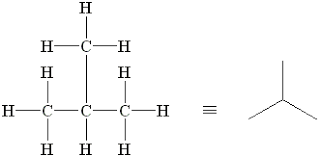
Branched hydrocarbon
 Image result for straight chain alkane

Friday, October 5, 2018

Forces of Nature - Elements

You will turn in your vocabulary words and notes on The Chemistry of Life.

Also, you will take notes on the video: Forces of Nature- Elements.  The Video is a BBC production with PBS co-produced by France Televisions.

The test for The Chemistry of Life will be on Monday, October 8, 2018.

Thursday, October 4, 2018

Acid, Bases, and pH

You will take notes on the pH scale.

In aqueous solutions, most of the water molecules are intact. However, some of the water molecules actually break apart into (H ions) and (OH ions ). A balance of these two highly reactive ions is critical for the proper functioning of chemical processes within organisms.

A chemical compound that releases hydrogen ions is called an acid.  One example of a strong acid is hydrochloric acid ( HCl).

A base also known as an alkali is a compound that accepts hydrogen ions and removes them from solution.  Some bases release hydroxide ions which combines with hydrogen ions to form water.


Image result for pH scale

Each pH unit represents a ten fold change in the concentration of 

hydrogen ions.

Image result for pH scale

Buffers: Biological fluids contain buffers, substances that minimize changes in pH by accepting hydrogen ions when the ion is in excess, and donating hydrogen ions when it is depleted.

The human blood must be maintained at a pH of 7.35.  Below a pH 6.8 or above a pH of 7.8 can be fatal.  The carbonic acid - bicarbonate buffer system works to maintain the pH of the blood by contributing hydrogen ion or hydroxide ions when needed.


Wednesday, October 3, 2018

Water Properties Lab

You will work in groups of 4 to examine the properties of water.